AI Visual Branding is changing how brands create, manage, and scale their visual content. From generating ideas to producing graphics, AI is gradually becoming an essential part of the visual branding process.
For marketers, producing consistent, high-quality visuals across social media, ads, and websites used to take hours and cost a lot. Now, AI tools help brands save time, stay consistent, and maintain a strong identity.
In this article, you’ll see how AI Visual Branding works and why it matters. You’ll also learn how your brand can use it to improve creative output, reduce costs, and make visuals more professional.
What is Visual Branding in Content Creation
Visual branding is how a brand looks and feels. It includes colors, fonts, logos, imagery, and layouts. In short, it includes everything that makes your brand recognizable.
Every digital visuals from social media graphics to website banners, plays a role in how your audience perceives your brand. For example, when you see Spotify’s green, black, and white palette, you immediately recognize the brand:
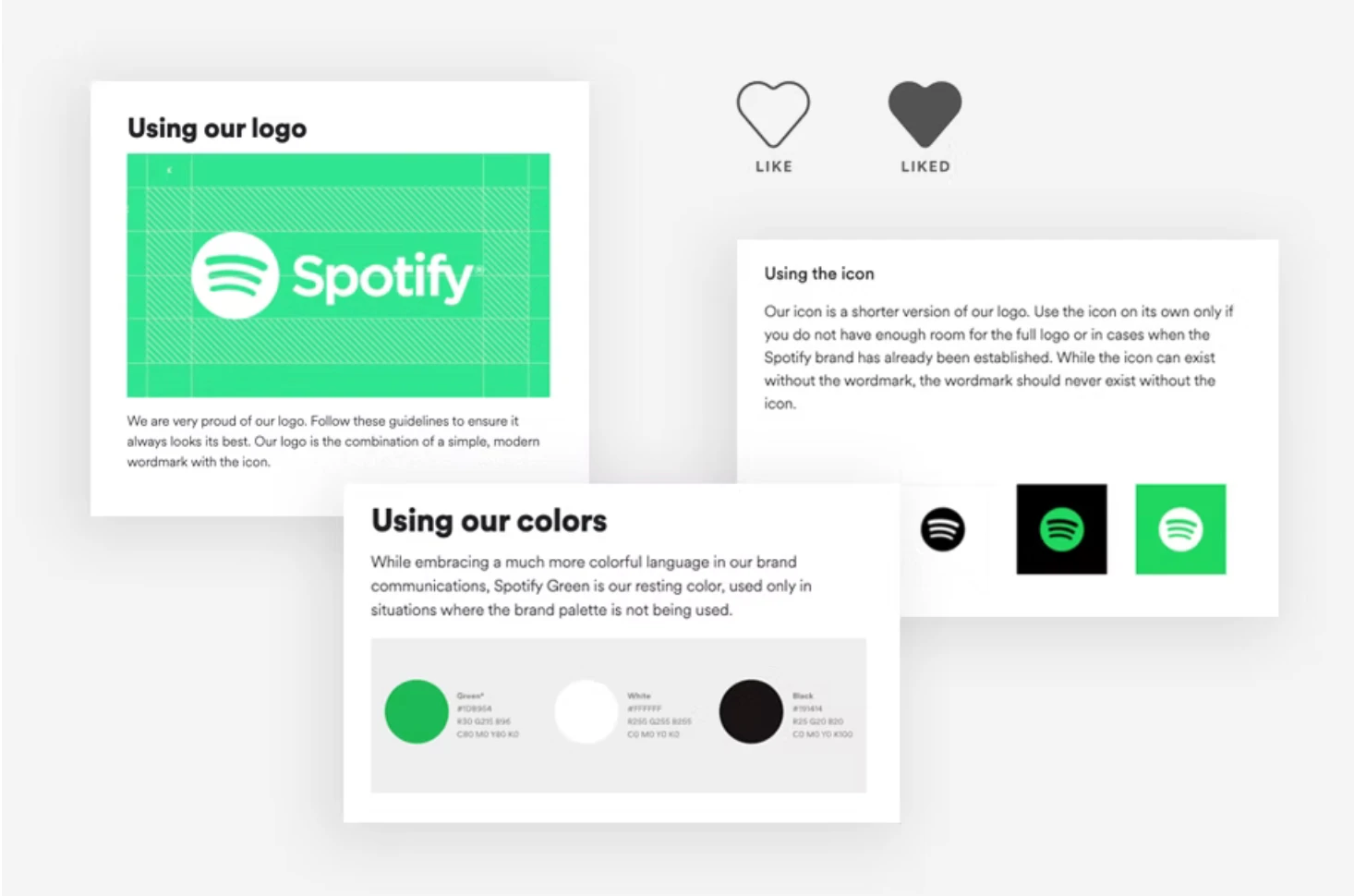
Image via Wix
Consistent use of these visual elements across app interfaces and social media creates a strong identity that sticks in users’ minds.
Visual branding in content creation is the process of producing content that showcases your brand in action. This means when users see your content, they instantly recognize your brand because of the visuals in it.
Traditional Visual Branding: The Challenges Brands Face
Before AI, creating visual branding content was slow, costly, and often inconsistent. Here are the challenges brands face when creating content branding manually:
- Slow Design Processes: Simple visuals could take hours or days to finalize with multiple revisions, causing delayed campaigns and affecting deadlines.
- High Costs and Resource Limitations: Hiring designers, agencies, or freelancers for every visual asset could strain budgets, especially for small businesses or startups.
- Inconsistent Brand Identity: Maintaining consistency in colors, fonts, and style across all platforms was challenging.
- Difficulty Scaling Content: As brands needed more visuals for social media, email campaigns, and ads, creating content manually became overwhelming.
These limitations created the perfect opportunity for the use of AI in visual branding and content creation. It also explains why AI tools are revolutionizing the design process today.
Also read: Top Web Design Elements That Can Make or Break Your Branding
AI in Visual Branding and Content Creation
Artificial Intelligence, or AI, refers to computer systems that can perform tasks that usually require human creativity and decision-making.
AI tools can generate images, graphics, layouts, and other digital assets based on your brand guidelines and creative prompts. For example, the screenshot below shows the result of a MidJourney AI prompt creating visual branding content for Coca-Cola:
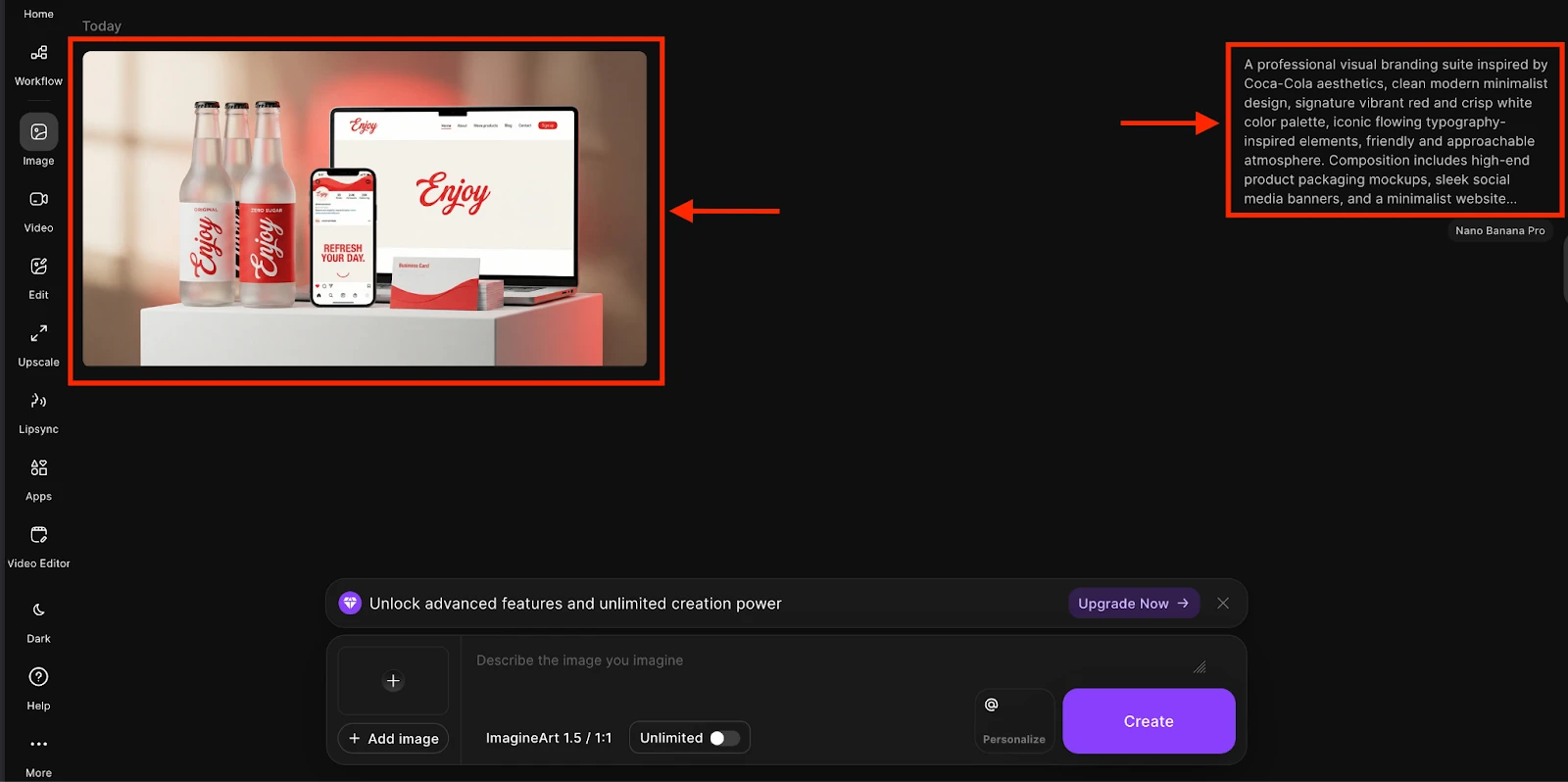
Image via Midjourney
AI acts as a smart assistant for designers. With AI visual branding, you can quickly produce multiple variations and even suggest creative ideas for campaigns.
Use of AI In The Visual Branding Process
AI has become an important tool in the visual branding process because it can assist at multiple stages. From content ideation to final asset creation, here’s how AI fits into the visual branding process:
- Idea Generation and Concept Support: As a designer, you can experiment with styles, layouts, and color palettes without starting from scratch each time.
- Design Execution and Asset Creation: Once a concept is approved, AI tools can produce high-quality visuals, including graphics, website banners and product packaging.
- Brand Consistency Management: AI can automatically apply your brand colors, fonts, and logos across all visuals, thereby reducing the risk of inconsistent messaging.
- Content Adaptation Across Platforms: AI can resize, reformat, and optimize visuals for different channels, such as Instagram posts, email headers, or ad banners.
For example, Adobe professional banner maker can help users to create interactive designs for the users. Integrating AI visual branding into your workflow will help speed up production and scale your team’s content while keeping it aligned with your brand’s identity.
How AI Is Actively Transforming Visual Branding Workflows
According to Canva’s 2025 The State of Marketing & AI Report, 94% of marketers now allocate budgets for AI. This confirms that AI is no longer experimental but essential to modern marketing workflows.
AI visual branding is actively transforming workflows and content creation in several key ways:
- Faster Content Production: AI can generate multiple design concepts in minutes, reducing the time needed to produce graphics, ads, and campaign visuals.
- Lower Creative Costs: Automating repetitive tasks and producing high-quality visuals reduces your reliance on large teams or external agencies.
- Better Collaboration Between Teams: AI allows non-designers to create usable visuals while your designers focus on strategy and high-level creative decisions.
- Easier Experimentation and Testing: You can quickly test different styles, layouts, or color palettes to see what resonates best with your audience before finalizing content.
Overall, AI visual branding can help your team work smarter and produce better results. Instead of trying to hire a personal assistant for design tasks, you can now use AI as a design assistant.
How to Effectively Use AI in Visual Branding and Content Creation
As a brand, here’s how to effectively use AI in visual branding and content creation:
1. Start With Clear Brand Guidelines
Before AI generates visuals, it needs a detailed prompt. Define your colors, fonts, logos, imagery style, and overall tone. This ensures every AI-generated asset reflects your brand identity and reduces time spent on revisions.
2. Combine AI With Human Oversight
AI is a powerful assistant, but it cannot replace human creativity. Ensure your team reviews outputs to make sure visuals align with messaging, maintain originality, and reflect the brand’s personality.
Let humans handle storytelling, emotional impact, and strategic decisions.
3. Choose the Right Tools
Not all AI tools will give the exact result your brand needs. Pick platforms that fit your workflow, scale with your needs, and allow collaboration. Features like brand templates, automated resizing, and multi-platform output make AI adoption more effective.
4. Test, Refine, and Iterate
AI-generated visuals should be tested with your audience. Analyze performance, refine concepts, and iterate to optimize results while maintaining consistency and quality.
By following these steps, you can leverage AI visual branding to save time, reduce costs, and produce high-quality visuals consistently.
Common Mistakes to Avoid When Using AI in Visual Branding and Content Creation
Just like any tool, using AI incorrectly can lead to errors or poor results. When applied without strategy or oversight, AI may generate inconsistent visuals that feel off-brand.
The table below highlights the dos and don’ts to help you use AI in visual branding and content creation responsibly:
|
Do’s |
Don’ts |
|
Set clear brand guidelines before using AI |
Use AI without defined brand rules |
|
Use AI as a creative assistant |
Treat AI as a full replacement for designers |
|
Review and refine AI-generated visuals |
Publish AI outputs without human review |
|
Test multiple visual variations |
Overuse the same AI-generated styles |
|
Choose tools that support collaboration |
Ignore copyright and usage policies |
When used thoughtfully, AI becomes a powerful creative ally. The key is balance. AI works best when guided by clear brand rules and human judgment.
By avoiding these common mistakes, you protect your brand’s identity while still benefiting from speed, efficiency, and scale.
Conclusion
The use of AI in visual branding and content creation is transforming how brands produce, manage, and scale visuals. It helps teams work faster, maintain consistency, and reduce costs while ensuring high-quality outputs.
While some fear AI may replace human creativity, the reality is different. AI serves as a creative assistant, handling repetitive tasks and generating ideas, while humans focus on storytelling, strategy, and emotional impact.
This partnership ensures visuals remain authentic, memorable, and aligned with brand identity.
Start exploring AI visual branding in your content creation today to streamline workflows and scale your visual content with confidence.